
Acute Pancreatitis: Symptoms, Diagnosis & Treatment

What is Acute Pancreatitis? Acute pancreatitis, also called acute pancreatic necrosis, constitutes abrupt inflammation of the pancreas that may lead to death even after receiving due medical care on account of chance development of serious complications at a later stage. However, mild types of acute pancreatitis are mostly cured through conservative treatment procedures that include total elimination of oral feeding and aggressive intravenous fluid rehydration, while severe types often involve surgery to tackle infected pancreatic necrosis and related complications. What are the symptoms of acute pancreatitis? Some of the acute pancreatitis symptoms include: ■ Severe upper abdominal pain, often radiating to the back ■ Retching ■ Shivering ■ Faster heartbeat ■ Respiratory problem ■ Hemodynamic instability (shock) ■ Hiccup ■ Fever ■ Loss of appetite ■ Hemorrhagic discoloration of the flanks What causes acute pancreatitis? ■ Excessive Alcoholism ■ Untreated gallstones ■ Penetrating ulcers ■ Carcinoma of the head of the pancreas ■ Post – ERCP complications ■ Certain drugs such as diuretics, steroids, salicylates, sulfonamides ■ Infections such as Viral hepatitis, mumps, coxsackie B virus, cytomegalovirus, Mycoplasma pneumoniae ■ Radiation X-ray ■ Autoimmune pancreatitis. What are the types of acute pancreatitis? There are basically two types of acute pancreatitis, such as Mild and Severe. Mild pancreatitis involves inflammation and edema of the pancreas, while severe pancreatitis entails necrosis of the pancreas and injury to adjacent organs. However, the hallmark of an acute pancreatitis consists of the manifestation of the inflammatory response, such as the recruitment of neutrophils to the pancreas. Nevertheless, it leads to the secondary manifestations of pancreatitis: hypovolemia from capillary permeability, acute respiratory syndrome, disseminated intravascular coagulation, renal failure, cardiovascular failure, and gastrointestinal hemorrhage. How is acute pancreatitis diagnosed? Even though acute pancreatitis may be diagnosed clinically, CT evaluation becomes necessary to distinguish between mild acute pancreatitis and severe necrotic pancreatitis. However, also relevant are Blood Investigation that include Full Blood Count, Renal Function Test, liver function, serum calcium, serum amylase and lipase, arterial blood gas, and Trypsin-Selective test. Blood studies are also conducted to identify organ failure, while they provide prognostic data about the patient’s condition. Nevertheless, triple-phase abdominal Computed Tomography, along with abdominal ultrasound, is considered in many circles as the gold standard for evaluation of acute pancreatitis. However, imaging during the first 12 hours of complaint may not prove helpful as the inflammatory and necrotic process usually takes more than 48 hours to fully manifest. Incidentally, MRI or Magnetic Resonance Imaging has also been found to be a valuable tool for visualization of the pancreas, especially for pancreatic fluid collection and necrotized debris. MRI also proves effective for patients with an allergy to the CT’s contrast material and/or overall sensitivity to vascular complications, pseudoaneyrysms as also venous thrombosis. MRI, when associated with MRCP (Magnetic Resonance Cholangiopancreatography), provides additional information in terms of the etiology of acute pancreatitis, such as the existence of small biliary stones (choledocholithiasis or cholelithiasis) and duct anomalies. Meanwhile, clinical trials have established that MRCP is no less effective a diagnostic tool for acute pancreatitis with biliary etiology than Endoscopic Retrograde Cholangiopancreatography (ERCP), while being less invasive and so more in use. Along with some of the noninvasive methods of diagnosing acute (and/or chronic) pancreatitis, Endoscopic Ultrasound (EUS) is also currently viewed as one of the most sensitive methods for detecting pancreatic lesions while in close proximity to the transducer to the pancreas. What are the modes of Treatment for acute pancreatitis? The primary state of management of patients with acute pancreatitis comprises supportive care concerning the following issues: ■ Fluid replacement through aggressive hydration at the rate of 5 to 10 ml/kg/hour of isotonic crystalloid solution, unless cardiovascular, renal, or other related comorbid factors preclude such a process. However, fluid replacement needs to be reassessed at frequent intervals in the first six hours, as well as the next 24/48 hours on the basis of clinical assessment, hematocrit, and BUN values. ■ Pain Control – Severe abdominal pain control often involves the use of intravenous opiates, mostly in the form of a patient-controlled analgesic pump. While hydromorphone or fentanyl are commonly used in acute pain control, the latter is preferred by many on account of its better safety profile, particularly in renal impairment. ■ Providing rest to the pancreas – Rest to the pancreas will also relieve the pain and the disease condition if oral feeding is eliminated. Since the pancreas is designed to secrete enzymes when food goes into the stomach, nothing will happen if there is no food there. Studies reveal that more than 20% of acute pancreatitis patients report relapse of pain within 48 hours of oral feeding. However, giving intravenous fluids will prevent dehydration and related problems. ■ Nutritional support through post-pyloric enteral feeding (in which a feeding tube is endoscopically or radiographically introduced into the third portion of the duodenum). Since this form of feeding is more physiological, it prevents gut mucosal atrophy while being free from the side effects of TPN. The other benefits of post-pyloric feeding include an inverse relationship of pancreatic exocrine secretions and remoteness of nutrient delivery from the pylorus, as also lesser risk of aspiration. Postscript: Prevention is always better than cure – try to prevent acute pancreatitis by reducing your alcohol intake. However, for people who already have an attack, treatment, in general, will take the form of support for the body functions, allowing the pancreas to heal itself on its own.
Chronic Pancreatitis: Symptoms, Causes & Treatment
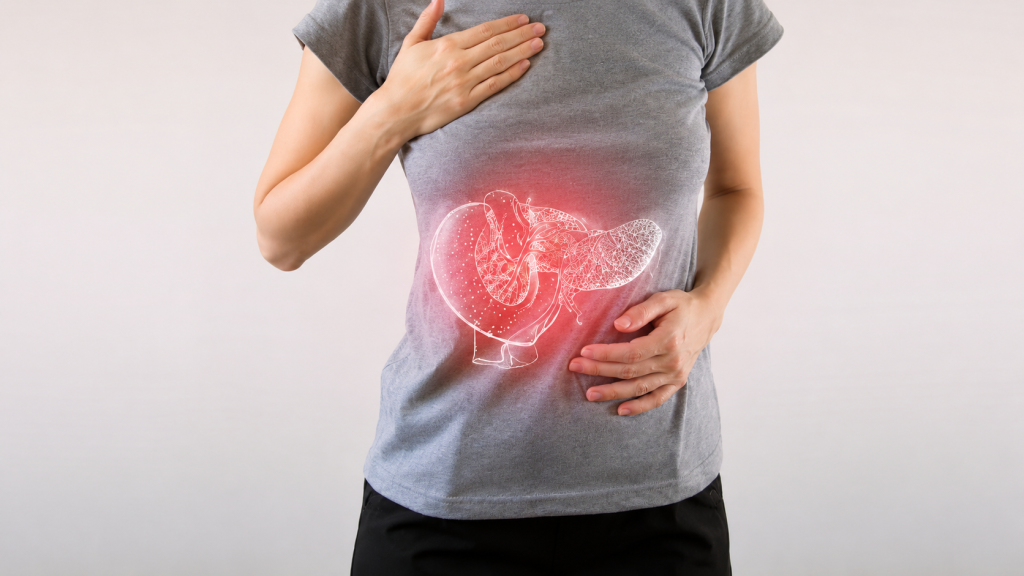
What is Chronic Pancreatitis? Chronic (long-term) Pancreatitis constitutes undeviating inflammation of the pancreas that impairs your system’s ability to digest food properly and regulate the blood sugar level in your body. Although acute, short-term pancreatitis often gets cured through conservative treatment, chronic pancreatitis seldom gets permanently cured. As a matter of fact, the damage caused due to a high degree of alcoholism and other causes over an extended period of time leaves so much ill effect on the organ that no line of ethical treatment can provide enduring relief. However, acute abdominal pain and secondary symptoms can be managed through medication and other means to some extent. What are the symptoms of chronic pancreatitis? Symptoms are usually absent in the initial stage, which, however, occur as outlined below as the ailment progresses. ■ Nausea and vomiting ■ Upper abdominal pain ■ Diarrhea ■ Pale, yellowish, sticky stool ■ Undue fatigue and too much thirst ■ Inexplicable weight loss However, as the disease progresses further, more alarming symptoms begin to appear that include: ■ Typical yellowish discoloration in the eyes and the skin, indicating the onset of Jaundice ■ Presence of pancreatic fluid in the abdomen ■ Internal bleeding ■ Intestinal blockage ■ Unrelenting abdominal pain What causes chronic pancreatitis? Although there could be numerous self-induced as well as inherited causes behind the onset of chronic pancreatitis in a person’s life, the commonest of all is alcohol abuse. Medical studies reveal that more than 70% of people affected by chronic pancreatitis have a long history of excessive alcohol consumption. However, some of the other causes that are also there are listed below: ■ Blockage of the pancreatic duct either by gallstones or pancreatic stones ■ Abdominal surgery ■ High calcium levels in blood (hypercalcemia), which may have been caused by an overactive parathyroid gland (hyperparathyroidism)/li> ■ High triglyceride level in blood (hypertriglyceridemia) ■ Chronic infection that remained untreated ■ Cystic fibrosis ■ Autoimmune disease ■ Excessive cigarette smoking ■ Family history of pancreatitis ■ Incredible, yet true – ERCP may lead to chronic pancreatitis. Wonder of all wonders – sometimes no cause is found at all! How is chronic pancreatitis diagnosed? Chronic Pancreatitis is not only difficult to treat but also difficult to diagnose. For instance, blood tests that normally reveal causes related to a lot of maladies prove to be of little value in diagnosing chronic pancreatitis, at least during the early stages of this deadly disease. However, blood tests do reveal the level of pancreatic enzymes in your blood. Nevertheless, some of the following tests are conducted to obtain more definite information, while imaging tests prove more helpful in diagnosing chronic pancreatitis. ■ X-rays ■ Ultrasound ■ CT scans ■ MRI scans To obtain conclusive evidence of the extent of damage caused to your pancreas, doctors (gastroenterologists) also go for an endoscopic ultrasound. During the procedure, the doctor inserts a long, flexible tube into your mouth, down through your stomach, and right up to the small intestine. The tube contains an ultrasonic probe that emits sound waves that create detailed images of your pancreas on a monitor attached to it. What are the modes of Treatment for chronic pancreatitis? To be honest about it, there isn’t much in the medical world to cure chronic pancreatitis, because the pancreas, like the liver, once damaged, cannot be recovered back to its original condition. However, medical help is available to manage the symptoms by way of medication, endoscopic therapies, and surgery. Medications that are often prescribed to manage the symptoms include: ■ Pain management medications to suppress agonizing abdominal pain ■ Supplementary digestive enzymes if your enzyme levels are found to be much too meager for digesting food properly ■ Insulin if you become diabetic ■ Steroids, if you happen to develop autoimmune pancreatitis Endoscopic treatment of chronic pancreatitis has currently drawn benefits from endoscopic procedures previously practiced for the main bile duct. While endotherapy is widely acclaimed as the most accepted alternative to surgery, cyst drainage procedure today presents the largest step forward in that non-surgical approach, regardless of whether direct (through stomach or duodenum) or indirect through the papilla in the duodenum. Pancreatic duct drainage, associated with stone clearance, is also feasible, while the procedure gives similar results to surgery with lower morbidity. Surgery, though not indicated for all, becomes inevitable for people who cannot endure excruciating abdominal pain that does not respond to pain-killing drugs. The only alternative then entails surgical removal of part of the organ. Postscript: People suffering from chronic pancreatitis should stay away from alcohol, even if hooch hasn’t been responsible for their dreaded illness, because it will exacerbate their sickness to a great extent. They should also refrain from smoking, as it would increase their risk of developing pancreatic cancer.