
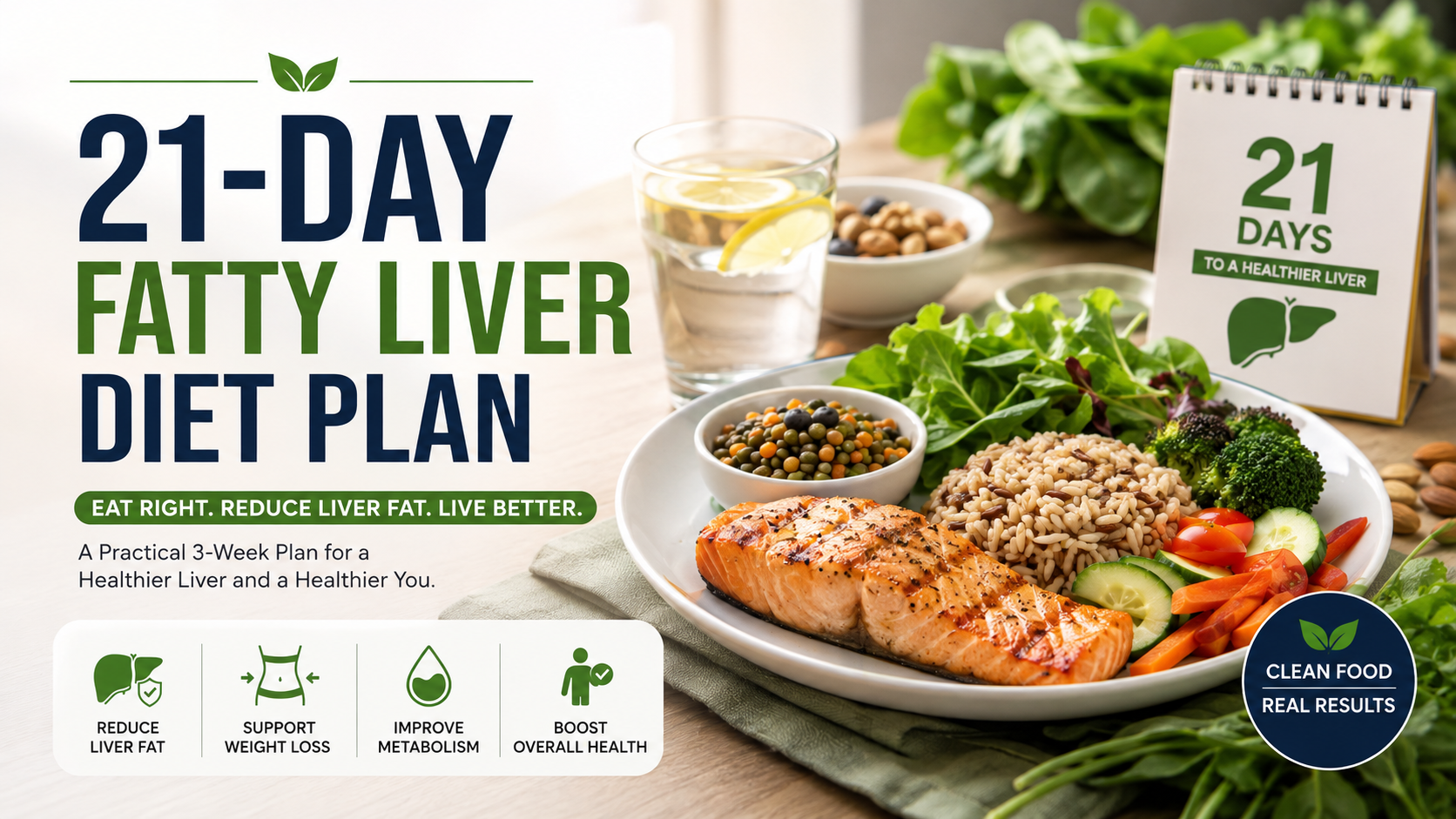
If you have been diagnosed with fatty liver, one of the first questions you may have is, “What should I eat to reduce liver fat?” Searching for a 21 day fatty liver diet plan can be a useful starting point, but it is important to understand that there is no single three-week diet that can permanently “cure” fatty liver.
The good news is that consistent dietary and lifestyle changes can help reduce excess liver fat and improve metabolic health. For people who are overweight or have obesity, gradual weight loss can reduce liver fat and may also improve inflammation and fibrosis.
This 21-day plan is designed around practical principles that can be continued beyond three weeks. It emphasizes vegetables, whole grains, fiber-rich foods, lean protein and healthier fats while reducing added sugar, highly processed foods and excessive saturated fat.
Medical note: This is a general educational diet framework, not an individualized prescription. People with diabetes, kidney disease, cirrhosis, pregnancy, significant weight loss, or other medical conditions may require a different nutritional plan. Consult a gastroenterologist, hepatologist or qualified dietitian before making major dietary changes.
Fatty liver occurs when excess fat accumulates in the liver. The condition is commonly associated with metabolic factors such as overweight or obesity, insulin resistance, type 2 diabetes and abnormal blood lipids.
The terminology has also evolved. What was traditionally called non-alcoholic fatty liver disease (NAFLD) is now commonly referred to as metabolic dysfunction-associated steatotic liver disease (MASLD).
Not everyone with fatty liver develops serious liver damage. However, in some people, ongoing inflammation can lead to fibrosis, cirrhosis and other complications. This is why identifying fatty liver early and addressing its underlying risk factors is important.
Can a 21-Day Diet Plan Reverse Fatty Liver?
A 21-day plan should be viewed as a starting point rather than a guaranteed cure.
There is no scientifically established rule that fatty liver disappears after exactly 21 days. Liver health generally improves through sustained changes in diet, physical activity, weight management and control of conditions such as diabetes and high cholesterol.
For people who need to lose weight, even modest weight loss can reduce liver fat. Maintaining a healthy weight over time can support liver health by helping reduce inflammation and the risk of progressive scarring. AASLD educational guidance notes that a 5–10% reduction in body weight is associated with meaningful improvements in several aspects of MASLD.
Therefore, the purpose of this 21 day fatty liver diet plan is to help establish habits that can continue for months and years.
Before starting the three-week plan, focus on these simple principles:
NIDDK recommends emphasizing low-glycemic foods such as many vegetables, fruits and whole grains, replacing saturated and trans fats with healthier unsaturated fats, and limiting foods and drinks containing large amounts of simple sugars, particularly fructose.
The following schedule provides a practical framework. Portions should be adjusted according to your age, body size, activity level, nutritional requirements and medical conditions.
Breakfast: Vegetable oats with boiled egg
Mid-morning: One whole fruit
Lunch: Brown rice, dal, mixed vegetables and grilled fish
Evening: Unsweetened tea with a small portion of nuts
Dinner: Vegetable soup with grilled chicken or tofu
Breakfast: Vegetable poha with a boiled egg
Mid-morning: Apple or guava
Lunch: Two small whole-wheat rotis, dal, vegetables and curd
Evening: Roasted chickpeas
Dinner: Grilled fish with sautéed vegetables
Breakfast: Unsweetened oatmeal topped with a small portion of fruit and seeds
Mid-morning: Orange or papaya
Lunch: Brown rice, rajma and a large serving of vegetables
Evening: Unsweetened green tea and a few almonds
Dinner: Two small rotis with vegetable curry and lean protein
Breakfast: Vegetable upma with plain curd
Mid-morning: Guava
Lunch: Roti, dal, leafy vegetables and grilled chicken
Evening: Roasted makhana without excessive salt or butter
Dinner: Vegetable soup with tofu or fish
Breakfast: Two eggs with whole-grain toast and vegetables
Mid-morning: Papaya
Lunch: Brown rice, dal, vegetables and curd
Evening: A small handful of walnuts
Dinner: Grilled chicken with a vegetable salad
Breakfast: Oats with unsweetened low-fat milk and a small amount of fruit
Mid-morning: Apple
Lunch: Two rotis, chana dal and mixed vegetables
Evening: Roasted chickpeas
Dinner: Fish with steamed or sautéed vegetables
Breakfast: Vegetable omelette with whole-grain toast
Mid-morning: One whole fruit
Lunch: Brown rice, dal, vegetables and grilled fish
Evening: Nuts in a controlled portion
Dinner: Light vegetable soup with tofu or chicken
During the second week, continue the same principles while increasing the variety of vegetables, legumes and protein sources.
Vegetable oats + fruit → dal, brown rice and vegetables → nuts → grilled fish and salad.
Egg and whole-grain toast → fruit → roti, dal, chicken and vegetables → roasted chickpeas → vegetable soup.
Vegetable poha → guava → brown rice, rajma and vegetables → unsweetened tea → grilled fish and vegetables.
Oatmeal with seeds → papaya → rotis, dal and leafy vegetables → walnuts → chicken and vegetable soup.
Vegetable omelette → apple → brown rice, dal and vegetables → roasted makhana → fish with vegetables.
Vegetable upma and curd → orange → roti, chana and vegetables → almonds → tofu and vegetable stir-fry.
Oats with unsweetened milk → whole fruit → brown rice, dal, vegetables and fish → roasted chickpeas → light chicken soup and salad.
Whole grains, vegetables, fruits, beans and other fiber-containing foods can help create a more nutrient-dense eating pattern while making meals more filling.
The final week should focus on making the diet realistic enough to continue after the 21 days.
Eggs + whole-grain toast → fruit → roti, dal and vegetables → nuts → grilled fish.
Vegetable oats → guava → brown rice, beans and vegetables → roasted chickpeas → chicken and salad.
Vegetable poha → papaya → roti, dal and fish → unsweetened tea → vegetable soup.
Omelette + whole-grain toast → apple → brown rice, dal and vegetables → walnuts → grilled chicken.
Oatmeal + seeds → orange → roti, chickpeas and vegetables → roasted makhana → fish and salad.
Vegetable upma + curd → fruit → brown rice, dal and vegetables → almonds → tofu or chicken with vegetables.
Vegetable omelette → whole fruit → balanced lunch containing whole grains, dal, vegetables and lean protein → nuts → light vegetable soup with fish, chicken or tofu.
One of the most important parts of a fatty liver diet is reducing foods that can contribute excessive calories, added sugar and unhealthy fats.
Try to minimize:
Soft drinks, sweetened packaged beverages, energy drinks and heavily sweetened tea or coffee can add substantial amounts of sugar without providing much nutritional value.
Limit sweets, cakes, pastries, biscuits, desserts and other foods containing large quantities of added sugar.
Regularly eating fried foods can make it harder to control calorie intake and may increase consumption of unhealthy fats.
Large portions of highly refined breads, snacks and other processed carbohydrate-rich foods should be limited.
If you have fatty liver disease, discuss alcohol consumption with your doctor. Alcohol can contribute to liver injury, and people with alcohol-associated liver disease are generally advised to stop drinking completely.
Is Rice Bad for Fatty Liver?
Rice does not automatically have to be eliminated from your diet.
The bigger issue is portion size, overall dietary quality and the type of rice or carbohydrate being consumed. You can consider smaller portions of rice alongside vegetables, dal and a protein source rather than building a meal primarily around a large serving of rice.
Brown rice and other whole grains may be useful alternatives because they generally provide more fiber than highly refined grains. NIDDK recommends choosing whole grains such as oatmeal and brown rice as part of a healthy eating pattern.
Whole fruit can generally fit into a fatty liver-friendly diet.
Choose whole fruits rather than relying heavily on fruit juice. Whole fruit provides fiber and requires more chewing, while juice can make it easier to consume a large amount of sugar quickly.
Good options can include:
However, people with diabetes or other metabolic conditions may need individualized advice about fruit portions and overall carbohydrate intake.
Diet is only one component of fatty liver management.
Regular physical activity can support weight management, metabolic health and liver health. AASLD educational material notes that both aerobic and resistance exercise can help decrease hepatic steatosis.
A practical goal for many adults is to gradually work toward regular weekly physical activity, subject to their health and fitness level. AASLD educational guidance references approximately 150 minutes of moderate activity per week as one commonly used target.
You could begin with:
If you have been inactive for a long time or have another medical condition, discuss an appropriate exercise level with your healthcare professional.
For people with overweight or obesity, weight loss can be an important part of fatty liver management.
NIDDK reports that weight loss can reduce liver fat, inflammation and fibrosis in people with fatty liver disease. However, rapid crash dieting is not the goal. A sustainable eating pattern that provides adequate nutrition is generally more useful than extreme calorie restriction.
The exact calorie requirement varies between individuals. Factors such as age, sex, body weight, physical activity and medical conditions all influence nutritional needs.
The biggest mistake would be treating the end of Day 21 as the end of your liver-health journey.
Instead, use these three weeks to establish habits such as:
A sustainable eating pattern is more valuable than following a restrictive diet for a few weeks and then returning to previous habits. NIDDK emphasizes that successful weight-management programs should include healthy eating, physical activity and strategies for maintaining changes over time.
Dietary changes are important, but food alone cannot determine whether fatty liver has caused liver damage.
If you have been diagnosed with fatty liver, your doctor may assess your liver enzymes, metabolic risk factors and overall risk of fibrosis. Depending on your individual situation, additional non-invasive tests or specialist evaluation may be appropriate.
This is particularly important if you have:
A gastroenterologist or hepatologist can help determine whether you have simple liver fat accumulation or evidence of inflammation and fibrosis.
A 21 day fatty liver diet plan can be a practical way to begin improving your eating habits, but it should not be considered a guaranteed cure or a substitute for medical evaluation.
The foundation is straightforward: eat more vegetables and fiber-rich foods, choose healthier sources of protein and unsaturated fats, control portions, reduce added sugar and highly processed foods, and stay physically active.
If you are overweight, gradual and sustainable weight loss can provide meaningful benefits for liver health.
Most importantly, fatty liver should be treated as a long-term health issue rather than a 21-day challenge. The goal is not simply to complete three weeks—it is to develop eating and lifestyle habits that protect your liver over the long term.
There is no guarantee that fatty liver will disappear within 21 days. However, starting healthier eating and physical activity habits can begin the process of improving metabolic health and reducing liver fat over time.
Yes, rice can be included in a balanced diet. Focus on appropriate portions and combine it with vegetables, legumes and a good protein source. Whole-grain options such as brown rice can also be considered.
Water is an excellent default choice. Unsweetened tea or coffee may also fit into a healthy diet for many people. Avoiding sugar-sweetened beverages is particularly important because they can contribute significant amounts of added sugar.
Yes. Whole fruits can be part of a balanced eating pattern. However, portion sizes may need to be individualized, especially for people with diabetes or other metabolic conditions.
No. Think of 21 days as a starting point. Long-term dietary habits, physical activity, weight management and appropriate medical follow-up are more important for maintaining liver health.
We are committed to the prevention, diagnosis and treatment of diseases of the digestive tract and liver. We provide complete day care services related to gastro and liver diseases such as doctor consultation, pathology, radiology, endoscopy, diet and nutrition, pharmacy and alternative medicine under one roof.
© 2026 | LivGastro | All Rights Reserved | Designed and Developed by KlickChamp
WhatsApp us