
Is Grade 2 Fatty Liver Dangerous? Understanding the Risks, Symptoms and Treatment
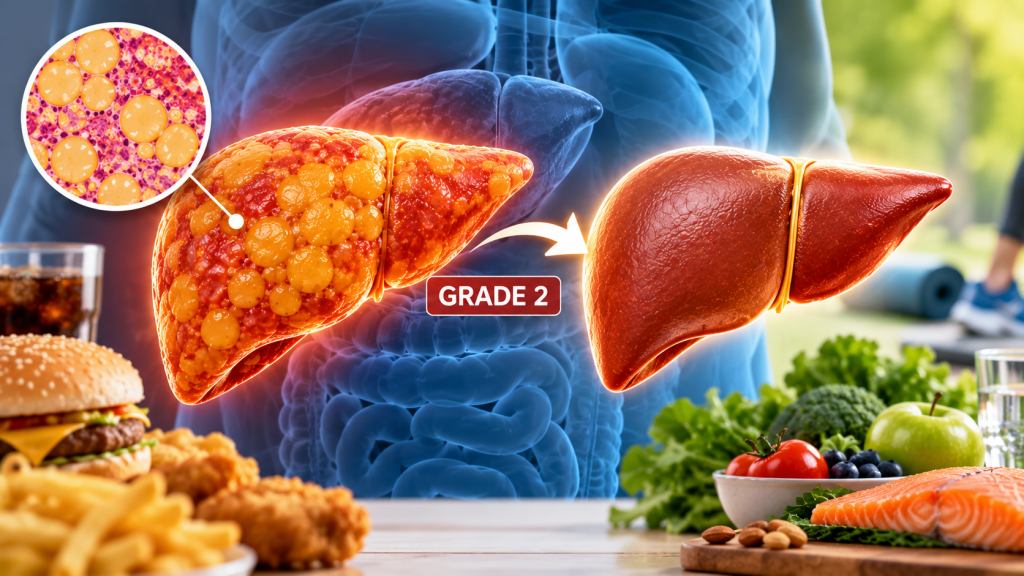
Is grade 2 fatty liver dangerous? This is a common concern after an ultrasound or liver scan reports moderate fatty infiltration of the liver. The good news is that grade 2 fatty liver does not automatically mean that your liver is permanently damaged or that you have cirrhosis. However, it should not be ignored. Grade 2 fatty liver generally indicates a moderate amount of fat accumulation in the liver. The more important question is whether there is associated liver inflammation or fibrosis (scarring). Fat accumulation, inflammation and fibrosis are different aspects of fatty liver disease, and assessing fibrosis is particularly important when determining the long-term risk. With appropriate medical evaluation and lifestyle changes, many people with fatty liver can significantly improve their liver health. What Is Grade 2 Fatty Liver? Fatty liver disease occurs when excessive fat accumulates inside liver cells. Today, metabolic dysfunction-associated steatotic liver disease (MASLD) is commonly used for fatty liver associated with metabolic risk factors such as obesity, insulin resistance, type 2 diabetes and abnormal blood lipids. When an ultrasound describes fatty liver as grade 2, it generally means a moderate degree of fatty infiltration. In some clinical grading systems, grade 2 steatosis corresponds to approximately 33–66% of liver cells containing fat, although ultrasound grading and histological grading are not identical and should not be treated as interchangeable. Importantly, grade 2 refers primarily to the amount of fat, not necessarily the amount of liver scarring. This distinction matters because a person can have substantial liver fat without advanced fibrosis, while another person with less obvious fatty liver may already have significant fibrosis. Is Grade 2 Fatty Liver Dangerous? Grade 2 fatty liver can become serious if the underlying causes are not addressed, but it is not the same as cirrhosis. Many people with fatty liver have few or no symptoms. Although many people have no noticeable symptoms, some may experience nonspecific symptoms such as fatigue or abdominal discomfort. Because fatty liver can remain silent, feeling well does not necessarily mean that the liver is completely healthy. The concern arises when fatty liver is accompanied by ongoing inflammation and liver-cell injury. This condition, historically called NASH and now commonly referred to as MASH, can contribute to fibrosis. Progressive fibrosis can eventually lead to cirrhosis and other serious complications. Therefore, the answer to “Is grade 2 fatty liver dangerous?” is: It can be a warning sign that deserves medical attention, but grade 2 fatty liver itself does not mean that you have irreversible liver damage. The next step is to determine whether there are additional risk factors and whether fibrosis is present. What Causes Grade 2 Fatty Liver? Fatty liver is frequently associated with metabolic health problems. Common contributing factors include: Overweight or obesity Insulin resistance Type 2 diabetes High triglycerides or abnormal cholesterol High blood pressure and metabolic syndrome A diet high in excess calories, refined carbohydrates or sugary foods Physical inactivity Certain medications or medical conditions Alcohol consumption, depending on the underlying diagnosis MASLD is particularly associated with cardiometabolic risk factors. This is why treating fatty liver is not only about the liver itself. Blood sugar, cholesterol, body weight, blood pressure, diet and physical activity can all be relevant to the overall management plan. What Are the Symptoms of Grade 2 Fatty Liver? One of the biggest challenges with fatty liver disease is that symptoms may be absent. Some people may experience: Fatigue or low energy A feeling of discomfort or heaviness in the upper-right abdomen Abnormal liver enzyme results on blood tests An enlarged liver in some cases However, symptoms alone cannot determine how severe fatty liver disease is. NIDDK notes that fatty liver disease is often silent and may produce few or no symptoms. This is why an ultrasound finding of grade 2 fatty liver should be discussed with a qualified gastroenterologist or hepatologist rather than simply being ignored. Does Grade 2 Fatty Liver Mean Fibrosis? Not necessarily. This is one of the most important points to understand. Steatosis means fat accumulation. Fibrosis means scar tissue formation. They are related but different processes. A report showing grade 2 fatty liver does not, by itself, tell you the stage of fibrosis. Doctors may therefore use blood-based calculations and non-invasive tests to assess the likelihood of significant liver scarring. AASLD currently provides guidance on both blood-based and imaging-based non-invasive assessment of hepatic fibrosis and steatosis. Depending on your medical history and test results, your doctor may consider: Liver function tests Complete blood count Blood glucose and HbA1c Lipid profile FIB-4 or other fibrosis risk assessment Ultrasound FibroScan or transient elastography Other specialized imaging Occasionally, liver biopsy when clinically necessary The objective is not simply to measure how much fat is present. The key clinical question is whether the liver has developed significant inflammation or fibrosis. Does Grade 2 Fatty Liver Increase the Risk of Cirrhosis? It can, but not everyone with grade 2 fatty liver develops cirrhosis. The progression generally involves a spectrum rather than an immediate jump from fatty liver to cirrhosis. In susceptible individuals, persistent liver injury may be associated with inflammation, fibrosis and eventually advanced fibrosis or cirrhosis. MASLD is recognized as a spectrum that can include steatosis, MASH, fibrosis, cirrhosis and, in some cases, liver cancer. Cirrhosis occurs when extensive scar tissue permanently damages the liver and interferes with its normal function. The risk of progression is influenced by several factors, including metabolic conditions and the presence and severity of fibrosis. That is why identifying risk early is so important. Can Grade 2 Fatty Liver Be Reversed? In many people, fat accumulation in the liver can improve significantly with appropriate lifestyle and medical management. If you are overweight or have obesity, gradual and sustainable weight reduction can reduce liver fat. NIDDK notes that losing at least 3% to 5% of body weight may reduce liver fat in people with overweight or obesity. Your doctor may recommend: 1. Improve Your Diet Focus on a balanced eating pattern containing vegetables, fruits in appropriate