
21-Day Fatty Liver Diet Plan: A Practical Guide to Better Liver Health
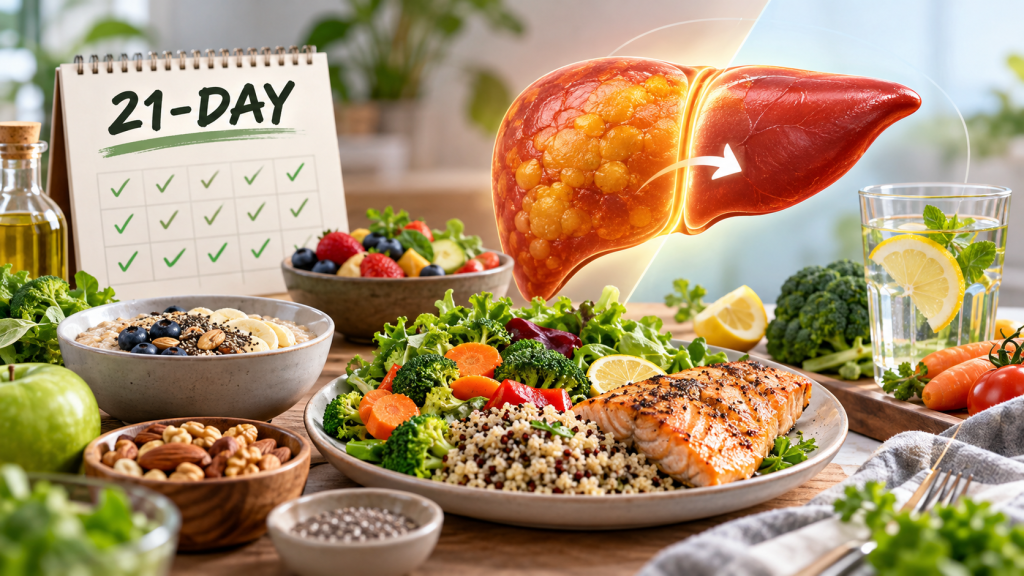
If you have been diagnosed with fatty liver, one of the first questions you may have is, “What should I eat to reduce liver fat?” Searching for a 21 day fatty liver diet plan can be a useful starting point, but it is important to understand that there is no single three-week diet that can permanently “cure” fatty liver. The good news is that consistent dietary and lifestyle changes can help reduce excess liver fat and improve metabolic health. For people who are overweight or have obesity, gradual weight loss can reduce liver fat and may also improve inflammation and fibrosis. This 21-day plan is designed around practical principles that can be continued beyond three weeks. It emphasizes vegetables, whole grains, fiber-rich foods, lean protein and healthier fats while reducing added sugar, highly processed foods and excessive saturated fat. Medical note: This is a general educational diet framework, not an individualized prescription. People with diabetes, kidney disease, cirrhosis, pregnancy, significant weight loss, or other medical conditions may require a different nutritional plan. Consult a gastroenterologist, hepatologist or qualified dietitian before making major dietary changes. What Is Fatty Liver? Fatty liver occurs when excess fat accumulates in the liver. The condition is commonly associated with metabolic factors such as overweight or obesity, insulin resistance, type 2 diabetes and abnormal blood lipids. The terminology has also evolved. What was traditionally called non-alcoholic fatty liver disease (NAFLD) is now commonly referred to as metabolic dysfunction-associated steatotic liver disease (MASLD). Not everyone with fatty liver develops serious liver damage. However, in some people, ongoing inflammation can lead to fibrosis, cirrhosis and other complications. This is why identifying fatty liver early and addressing its underlying risk factors is important. Can a 21-Day Diet Plan Reverse Fatty Liver? A 21-day plan should be viewed as a starting point rather than a guaranteed cure. There is no scientifically established rule that fatty liver disappears after exactly 21 days. Liver health generally improves through sustained changes in diet, physical activity, weight management and control of conditions such as diabetes and high cholesterol. For people who need to lose weight, even modest weight loss can reduce liver fat. Maintaining a healthy weight over time can support liver health by helping reduce inflammation and the risk of progressive scarring. AASLD educational guidance notes that a 5–10% reduction in body weight is associated with meaningful improvements in several aspects of MASLD. Therefore, the purpose of this 21 day fatty liver diet plan is to help establish habits that can continue for months and years. Basic Principles of a Fatty Liver Diet Before starting the three-week plan, focus on these simple principles: Eat More Green leafy vegetables Cruciferous vegetables Fresh whole fruits Oats and other whole grains Brown rice and other minimally processed grains Dal and beans Fish Eggs Skinless chicken Low-fat or unsweetened dairy, when appropriate Nuts and seeds in controlled portions Healthy unsaturated fats Eat Less Sugary drinks Sweets and desserts Bakery products Deep-fried foods Processed snacks Excessively fatty meats Foods high in saturated fat Highly refined carbohydrates Large portions Alcohol NIDDK recommends emphasizing low-glycemic foods such as many vegetables, fruits and whole grains, replacing saturated and trans fats with healthier unsaturated fats, and limiting foods and drinks containing large amounts of simple sugars, particularly fructose. 21-Day Fatty Liver Diet Plan The following schedule provides a practical framework. Portions should be adjusted according to your age, body size, activity level, nutritional requirements and medical conditions. Days 1–7: Reset Your Eating Habits Day 1 Breakfast: Vegetable oats with boiled eggMid-morning: One whole fruitLunch: Brown rice, dal, mixed vegetables and grilled fishEvening: Unsweetened tea with a small portion of nutsDinner: Vegetable soup with grilled chicken or tofu Day 2 Breakfast: Vegetable poha with a boiled eggMid-morning: Apple or guavaLunch: Two small whole-wheat rotis, dal, vegetables and curdEvening: Roasted chickpeasDinner: Grilled fish with sautéed vegetables Day 3 Breakfast: Unsweetened oatmeal topped with a small portion of fruit and seedsMid-morning: Orange or papayaLunch: Brown rice, rajma and a large serving of vegetablesEvening: Unsweetened green tea and a few almondsDinner: Two small rotis with vegetable curry and lean protein Day 4 Breakfast: Vegetable upma with plain curdMid-morning: GuavaLunch: Roti, dal, leafy vegetables and grilled chickenEvening: Roasted makhana without excessive salt or butterDinner: Vegetable soup with tofu or fish Day 5 Breakfast: Two eggs with whole-grain toast and vegetablesMid-morning: PapayaLunch: Brown rice, dal, vegetables and curdEvening: A small handful of walnutsDinner: Grilled chicken with a vegetable salad Day 6 Breakfast: Oats with unsweetened low-fat milk and a small amount of fruitMid-morning: AppleLunch: Two rotis, chana dal and mixed vegetablesEvening: Roasted chickpeasDinner: Fish with steamed or sautéed vegetables Day 7 Breakfast: Vegetable omelette with whole-grain toastMid-morning: One whole fruitLunch: Brown rice, dal, vegetables and grilled fishEvening: Nuts in a controlled portionDinner: Light vegetable soup with tofu or chicken Days 8–14: Increase Fiber and Nutritional Variety During the second week, continue the same principles while increasing the variety of vegetables, legumes and protein sources. Day 8 Vegetable oats + fruit → dal, brown rice and vegetables → nuts → grilled fish and salad. Day 9 Egg and whole-grain toast → fruit → roti, dal, chicken and vegetables → roasted chickpeas → vegetable soup. Day 10 Vegetable poha → guava → brown rice, rajma and vegetables → unsweetened tea → grilled fish and vegetables. Day 11 Oatmeal with seeds → papaya → rotis, dal and leafy vegetables → walnuts → chicken and vegetable soup. Day 12 Vegetable omelette → apple → brown rice, dal and vegetables → roasted makhana → fish with vegetables. Day 13 Vegetable upma and curd → orange → roti, chana and vegetables → almonds → tofu and vegetable stir-fry. Day 14 Oats with unsweetened milk → whole fruit → brown rice, dal, vegetables and fish → roasted chickpeas → light chicken soup and salad. Whole grains, vegetables, fruits, beans and other fiber-containing foods can help create a more nutrient-dense eating pattern while making meals more filling. Days 15–21: Build a Sustainable Routine The final