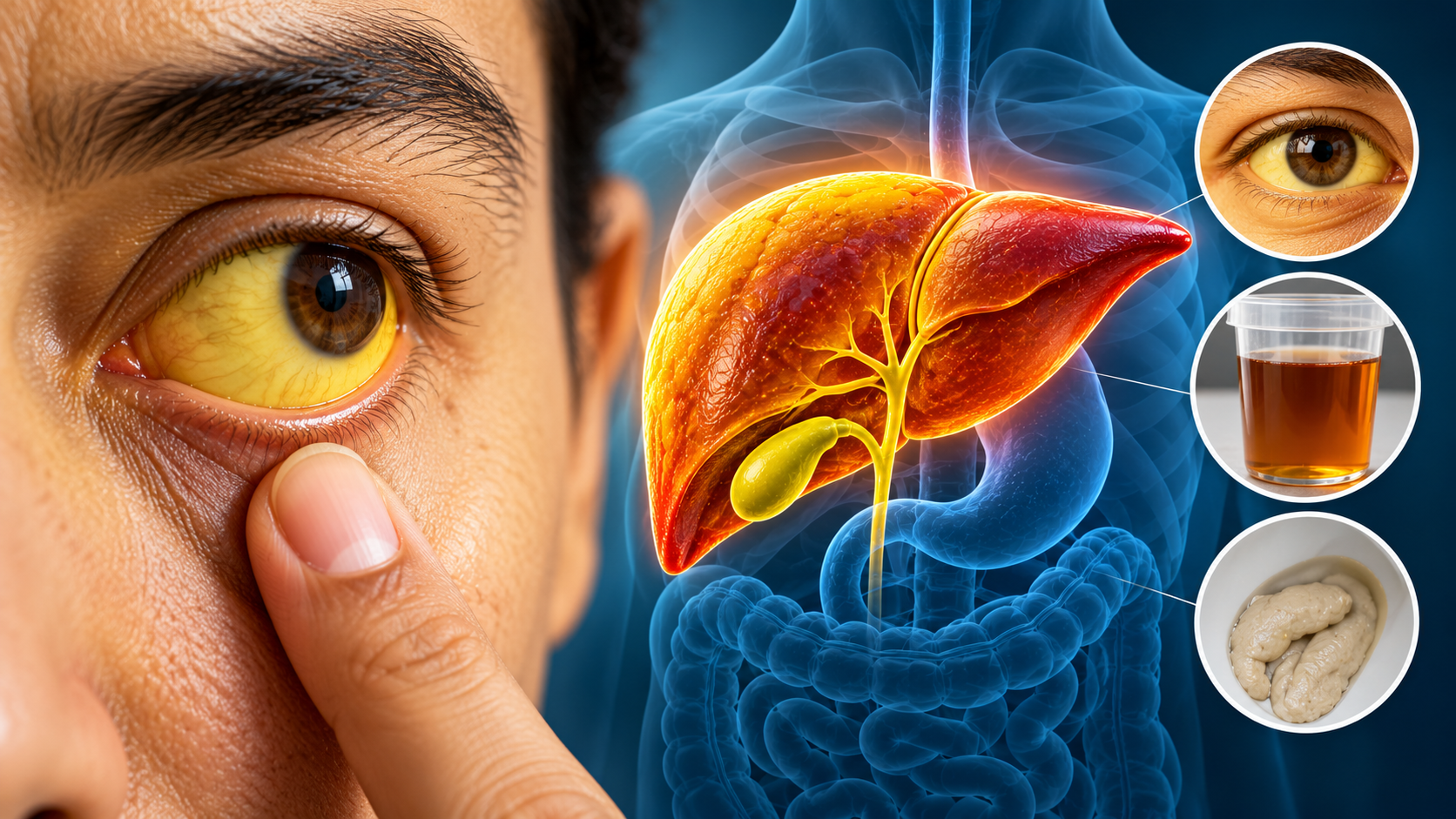
Have you noticed yellowing of your eyes or skin, unusually dark urine, or persistent tiredness? These changes may indicate jaundice, a condition that occurs when bilirubin accumulates in the body. Although jaundice is often associated with liver problems, it can also develop because of blood disorders, infections, or blockages in the bile ducts.
Understanding the symptoms and causes of jaundice is essential for identifying potential health concerns and seeking appropriate medical care. While some underlying conditions are treatable, jaundice can occasionally indicate a serious medical problem that requires prompt evaluation.
At LivGastro, we believe that understanding your digestive and liver health helps you make informed decisions about your well-being. This guide explains what jaundice means, its common warning signs, possible causes, diagnostic tests, and available treatment approaches.
Jaundice is a medical sign characterised by yellowing of the skin, the whites of the eyes, and sometimes the inside of the mouth. It develops when a yellow pigment called bilirubin builds up in the bloodstream.
Bilirubin forms naturally when the body breaks down old red blood cells. Normally, the liver processes bilirubin and helps eliminate it through bile and the digestive system. When bilirubin production increases, the liver cannot process it properly, or bile flow becomes obstructed, bilirubin levels may rise.
Jaundice is not a disease in itself. Instead, it is a sign that an underlying condition may need medical investigation.
The seriousness of jaundice depends on its cause, the person’s age, associated symptoms, and overall health.
Recognising the early symptoms of jaundice can help people seek medical assessment without unnecessary delay. The symptoms may vary depending on the underlying condition.
Common warning signs include:
Not everyone experiences all these symptoms. Some people may initially notice only a change in eye colour or urine.
Important: New yellowing of the eyes or skin in an adult should be medically evaluated promptly. Severe abdominal pain, fever with jaundice, confusion, unusual drowsiness, or vomiting blood requires urgent medical attention.
The causes of jaundice can be broadly understood by examining where bilirubin processing becomes disrupted. The problem may occur before bilirubin reaches the liver, within the liver itself, or after the liver has processed it.
Viral hepatitis is an infection that causes inflammation of the liver. Hepatitis A, B, C, D, and E differ in how they spread and the type of illness they can cause.
Some hepatitis infections can interfere with the liver’s ability to process bilirubin, resulting in jaundice. Depending on the virus and the individual circumstances, the illness may also cause fatigue, nausea, abdominal discomfort, and loss of appetite.
Testing is necessary to identify the infection and determine the appropriate treatment.
Fatty liver disease occurs when excess fat accumulates in liver cells. Many people with fatty liver do not develop jaundice, particularly in the early stages.
However, advanced liver disease, including liver cirrhosis, can impair normal liver function and lead to elevated bilirubin levels. Cirrhosis involves significant scarring of the liver and may develop after prolonged liver injury from different causes.
Jaundice in someone with known liver disease should not be ignored, as it may indicate worsening liver function or another complication.
Bile carries bilirubin and other substances from the liver towards the digestive tract. When a gallstone blocks a bile duct, bilirubin may accumulate in the bloodstream.
This type of obstruction can cause yellow eyes, dark urine, pale stools, and itching. Some people also experience pain in the upper-right abdomen.
Depending on the underlying cause, treatment may involve removing the obstruction through an appropriate medical or endoscopic procedure.
Excessive alcohol consumption can damage liver cells and contribute to inflammation, scarring, and impaired liver function.
In more advanced cases, alcohol-related liver disease may cause jaundice alongside fatigue, abdominal swelling, or other signs of liver dysfunction.
Treatment depends on the severity of the condition and may include complete alcohol avoidance, medical supervision, nutritional support, and management of complications.
Bilirubin production may increase when red blood cells break down faster than normal. This process is called haemolysis.
Certain forms of haemolytic anaemia and other blood disorders can therefore cause jaundice even when the primary problem is not within the liver.
Doctors may recommend blood tests to determine whether excessive red blood cell breakdown is contributing to elevated bilirubin.
Some medicines and supplements can cause liver injury or interfere with bile flow. Certain genetic conditions, including Gilbert syndrome, can also increase bilirubin levels.
Less commonly, a tumour involving the liver, pancreas, or bile ducts may obstruct bile flow or affect liver function.
Because these causes require different approaches, it is important to establish the underlying diagnosis rather than assuming that all jaundice is caused by hepatitis or fatty liver.
Doctors may classify jaundice into three broad categories according to where the problem occurs.
Pre-hepatic jaundice: This develops when red blood cells break down excessively, producing more bilirubin than the liver can process efficiently.
Hepatic jaundice: This occurs when liver cells cannot process or transport bilirubin normally. Causes may include hepatitis, certain medicines, and advanced liver disease.
Post-hepatic jaundice: Also called obstructive jaundice, this occurs when bile cannot flow normally through the bile ducts. Gallstones and certain growths can cause this obstruction.
These categories help doctors understand the possible mechanism behind jaundice and select suitable investigations.
The diagnosis of jaundice involves identifying why bilirubin has increased. A doctor will generally review the patient’s symptoms, medical history, medicines, alcohol use, and possible exposure to infections before recommending tests.
Depending on the suspected cause, investigations may include:
A bilirubin blood test measures bilirubin levels in the bloodstream. Doctors may also request liver blood tests, including ALT, AST, ALP, and GGT, to assess patterns of liver injury or impaired bile flow.
A complete blood count and other blood tests may help identify anaemia, infection, or additional abnormalities.
When a viral infection is suspected, specific blood tests can help determine whether hepatitis is responsible for the symptoms.
An abdominal ultrasound can help examine the liver, gallbladder, and bile ducts. It may identify gallstones, bile duct dilation, or certain structural abnormalities.
Depending on the findings, a doctor may recommend CT, MRI, MRCP, or other specialised investigations.
In selected cases, an endoscopic procedure such as ERCP (endoscopic retrograde cholangiopancreatography) may be used to investigate or treat certain bile duct problems.
Not every person with jaundice needs every test. The appropriate diagnostic plan depends on the clinical findings and suspected cause.
There is no single medicine that treats every case of jaundice. Jaundice treatment focuses on the condition responsible for the elevated bilirubin level.
Depending on the diagnosis, management may involve:
Recovery time varies considerably. Some people improve within days or weeks, while others need longer treatment and follow-up.
Do not start liver supplements, herbal remedies, or medicines without medical advice. Some products marketed as natural treatments can actually damage the liver.
Dietary needs depend on the underlying condition, the severity of illness, and the person’s nutritional status. Food alone cannot treat every cause of jaundice.
A balanced eating pattern may support recovery by providing adequate energy and nutrients.
Consider the following general principles:
There is no single food that can quickly remove bilirubin from the body. The priority is to identify and treat the underlying cause.
Consult a qualified gastroenterologist or liver specialist if you notice yellowing of the eyes or skin, dark urine, pale stools, or other symptoms that may indicate jaundice.
Seek urgent medical care if jaundice occurs alongside severe abdominal pain, fever, confusion, unusual drowsiness, vomiting blood, or significant abdominal swelling.
Pregnant individuals who develop jaundice or intense unexplained itching should also seek prompt medical assessment.
A gastroenterologist can review your symptoms, arrange appropriate investigations, and determine whether the problem involves the liver, gallbladder, bile ducts, or another system.
At LivGastro, patients can seek professional guidance for digestive and liver health concerns. Early evaluation can help clarify the cause of jaundice and guide appropriate management.
Jaundice is a warning sign, not a diagnosis. Although yellowing of the eyes and skin is its most recognisable feature, the underlying cause can range from a temporary medical condition to a serious liver or bile duct disorder.
Understanding the symptoms, causes, diagnosis, and treatment of jaundice can help you recognise when medical attention is necessary. Blood tests, imaging, and other investigations allow doctors to determine the cause and recommend appropriate care.
If you or a family member develops jaundice, do not rely solely on home remedies or wait for the symptoms to disappear. Consult a qualified healthcare professional to understand the cause and receive appropriate guidance.
LivGastro encourages timely medical evaluation and informed decisions to support better digestive and liver health.
Medical disclaimer: This article is intended for general educational purposes only. It does not replace professional medical advice, diagnosis, or treatment. Individual evaluation and treatment should be guided by a qualified healthcare professional.
Jaundice develops when bilirubin accumulates in the bloodstream. Common causes include liver inflammation, viral hepatitis, bile duct obstruction, gallstones, and certain blood disorders. The exact cause can only be established through appropriate medical evaluation.
The first noticeable signs may include yellowing of the whites of the eyes, yellowish skin, dark urine, pale stools, or itching. Some people also experience fatigue, nausea, or loss of appetite. New jaundice should be assessed promptly by a doctor.
Jaundice can indicate anything from a relatively mild underlying condition to a serious liver or bile duct problem. Its severity depends on the cause and the person's overall health. Medical evaluation is important to determine whether treatment is needed urgently.
Recovery depends on the underlying cause, the severity of the illness, and the individual's health. Some cases improve within days or weeks, while others require longer treatment. There is no single recovery timeline that applies to everyone.
A gastroenterologist or hepatologist can evaluate jaundice related to liver, gallbladder, and bile duct conditions. Depending on your symptoms and test results, other specialists may also be involved. Seek urgent care if jaundice occurs with severe pain, fever, confusion, or other serious warning signs.
We are committed to the prevention, diagnosis and treatment of diseases of the digestive tract and liver. We provide complete day care services related to gastro and liver diseases such as doctor consultation, pathology, radiology, endoscopy, diet and nutrition, pharmacy and alternative medicine under one roof.
© 2026 | LivGastro | All Rights Reserved | Designed and Developed by KlickChamp
WhatsApp us
